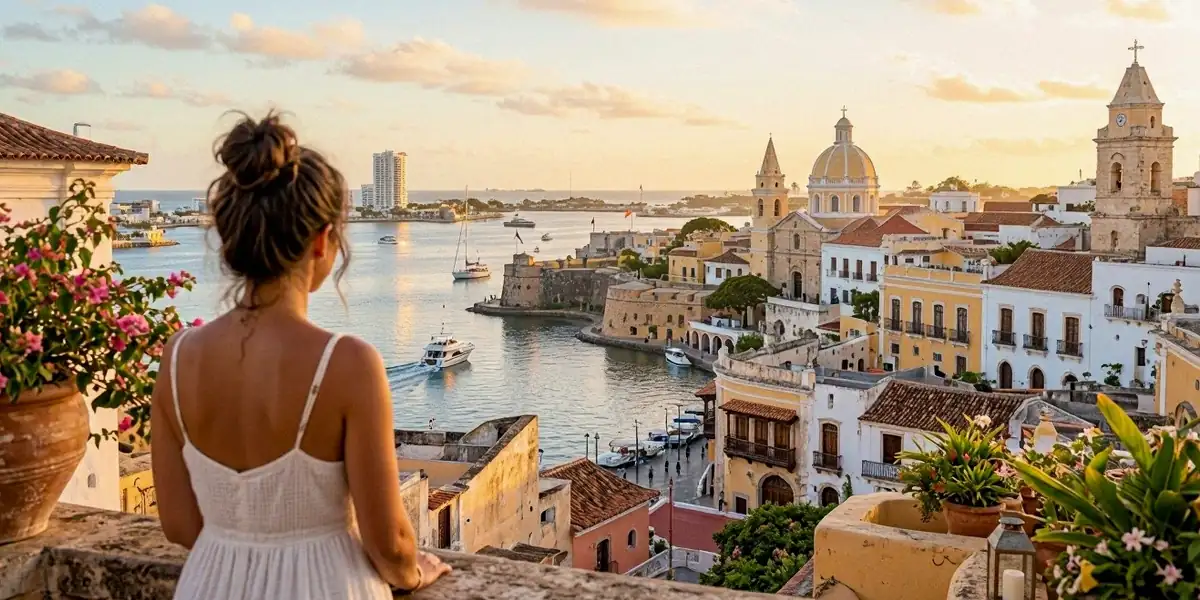
Where to Stay in Cartagena: Areas Compared
You’ve just stepped off a long-haul flight from Sydney or Melbourne — maybe via Santiago on Qantas, maybe through Bogotá on LATAM — and the Caribbean heat hits you the moment the doors open. The last thing you want now is to discover you’ve booked a hotel in the wrong part of town. Cartagena looks compact on a map, but each neighbourhood has its own personality, price tag and set of trade-offs. We’ve put together this guide so you can match your accommodation to the way you actually travel.
The Walled City (Centro Histórico): Best for First-Timers and Luxury
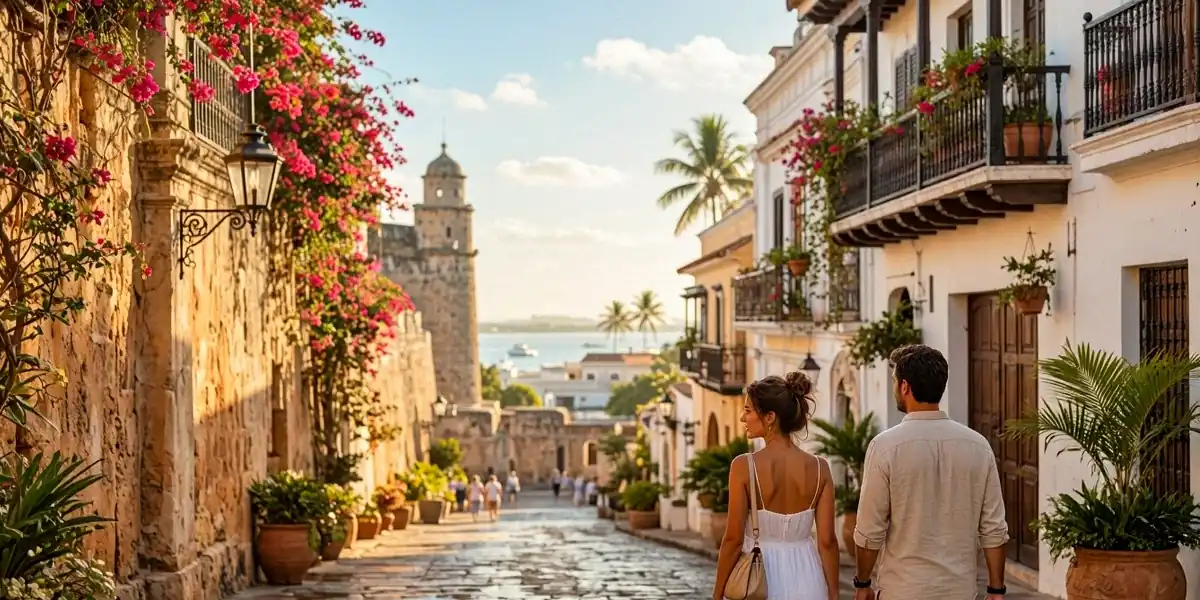
The Walled City is the Cartagena you’ve seen on postcards: bougainvillea spilling over balconies, horse-drawn carriages clattering over cobblestones, and plazas that glow amber at dusk. It’s also a UNESCO World Heritage Site, which tends to win over Australian history buffs who appreciate well-preserved colonial architecture. Everything worth seeing in the old town — the Clock Tower, Plaza Santo Domingo, the city walls themselves — is reachable on foot, which is a welcome change after a 20-plus hour journey.
This is where Cartagena’s most famous boutique hotels sit. Hotel Casa San Agustín occupies a restored 17th-century mansion with a courtyard pool, while Sofitel Legend Santa Clara delivers full five-star polish inside a former convent. You’ll pay for the privilege — this is the most expensive area in the city — but for a first visit, the atmosphere is hard to beat.
Pros: Walkable, historic, romantic
- Every major sight, restaurant and bar within a 15-minute walk
- Stunning colonial architecture and photogenic streets around every corner
- Ideal for couples and honeymooners
Cons: Pricey, noisy at night, cruise ship crowds
- Room rates can be double those in Getsemaní
- Bars and clubs keep some streets loud until the early hours
- Cruise ship passengers flood the plazas mid-morning on port days
Getsemaní: Best for Budget Travellers and Nightlife
Just outside the old walls, Getsemaní has transformed from a rough-edged barrio into Cartagena’s most creative quarter. Street art covers entire facades, and the neighbourhood was the birthplace of Cartagena’s independence movement — a detail that resonates with Aussies who love local history and a good underdog story. These days it’s where backpackers, digital nomads and young Colombians mix over arepas and cold beer.
Accommodation skews affordable. Casa en el Agua is a well-known hostel option, while Hotel Boutique Casa Córdoba offers a step up in comfort without the walled city price tag. The food scene is excellent value — think street-side ceviche, patacones and grilled skewers for a fraction of what you’d pay inside the walls.
Pros: Cheap eats, lively atmosphere, local vibe
- Some of the best-value restaurants in Cartagena
- Plaza Trinidad is the social heart of the city after dark
- Still only a 10-minute walk to the historic centre
Cons: Can be sketchy at night, noisy, fewer upscale hotels
- Stick to well-lit streets and avoid flashing valuables after midnight
- Music from bars carries late into the night
- Luxury options are limited compared to the walled city
Bocagrande and Laguito: Best for Beach Access and Modern Comforts
Bocagrande is Cartagena’s high-rise strip — a peninsula of modern towers facing the Caribbean, with Laguito forming its quieter southern tip. If you want to step out of your hotel and onto sand, this is the place. The Hilton Cartagena and Estelar Cartagena de Indias are the headline names, both offering pools, gyms and the kind of resort amenities that feel closer to Miami than to colonial Colombia.
Families tend to gravitate here, and it’s easy to see why: spacious rooms, reliable air conditioning and restaurants that cater to international palates. The trade-off is character — you won’t find much colonial charm — and you’ll need taxis to reach the historic centre, roughly 10 to 15 minutes away.
Pros: Beachfront, modern, good for families
- Direct beach access from most hotels
- Modern infrastructure and international-standard amenities
- Plenty of family-friendly dining and shopping
Cons: Less character, need taxis to historic centre, strong currents
- Beach currents can be strong — swim with caution
- Feels generic compared to the old town
- Taxi or bus required for sightseeing and nightlife
Rosario Islands: Best for a Secluded Getaway
The Rosario Islands sit about 45 minutes by speedboat from Cartagena’s Muelle de la Bodeguita, and they feel like a different world entirely. Crystal-clear water, coral reefs and a handful of small resorts make this the pick for honeymooners or anyone wanting to disappear for a few days.
You can visit on a day trip, but we’d argue overnight is worth it. Blue Apple Beach and Hotel San Pedro de Majagua are two of the better-known eco-resorts, and many properties run all-inclusive packages covering meals and activities. Transfers must be booked in advance, and boats can be cancelled in rough weather — build a buffer day into your itinerary.
Pros: Crystal-clear water, quiet, all-inclusive options
- Some of the best snorkelling and swimming in the region
- Genuine tranquillity — no traffic, no crowds
- All-inclusive resorts simplify budgeting
Cons: Limited dining, expensive, weather-dependent boats
- Few independent restaurants outside the resorts
- Nightly rates are among the highest in the region
- Rough seas can delay or cancel boat transfers
Manga and Marbella: Best for Long Stays and Local Living
Manga sits just east of Getsemaní and feels genuinely residential — think neighbourhood bakeries, quiet streets and a slower pace. Hotel Manga Real is a solid base here, and you’re still only a short taxi ride from the old town. Marbella, meanwhile, hugs the waterfront north of Bocagrande and offers a calmer alternative with similar convenience.
For extended stays — say, a month of remote work — these areas deliver noticeably better value than the tourist core. You’ll live alongside locals rather than other visitors, which suits travellers who’ve already ticked off the big sights.
Pros: Authentic, affordable, less touristy
- Lower rents and hotel rates for longer bookings
- Genuine Colombian neighbourhood atmosphere
- Close enough to the centre for easy day trips
Cons: Fewer attractions, need to taxi for nightlife
- Not much to see within walking distance
- Evenings require a taxi if you want bars or clubs
- English is less widely spoken than in tourist zones
Our Verdict: Which Area Suits You Best?
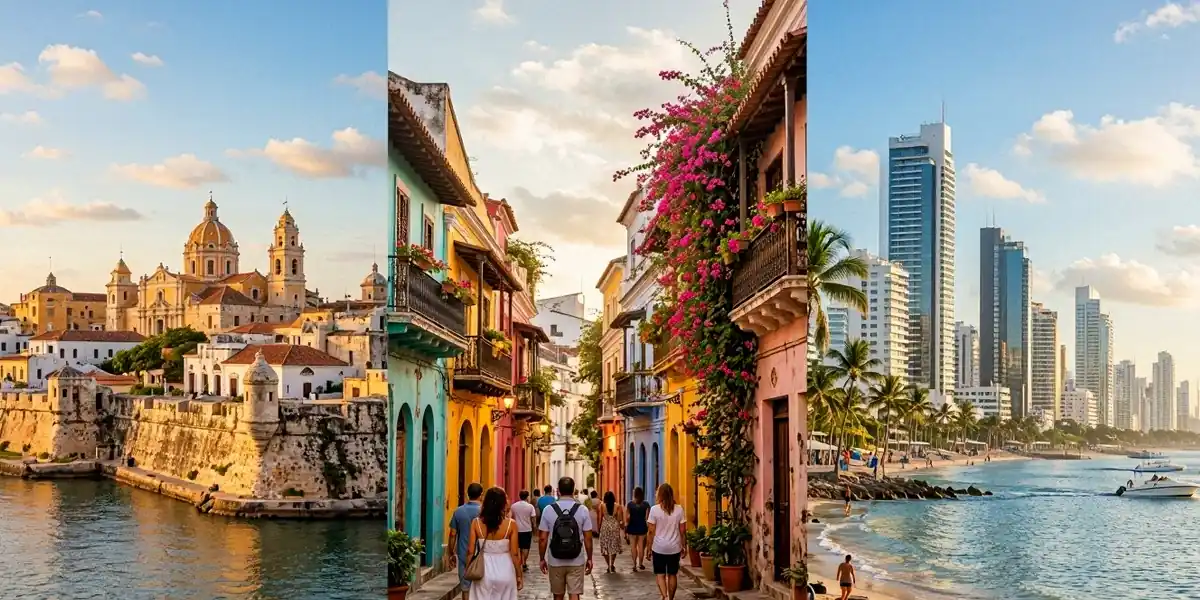
After comparing all five areas, here’s how we’d match them to traveller types:
- First-timers: Stay in the Walled City. The convenience and atmosphere justify the cost.
- Budget backpackers: Getsemaní offers the best mix of price, location and energy.
- Beach lovers and families: Bocagrande and Laguito deliver sand, pools and modern comfort.
- Honeymooners: The Rosario Islands are worth the splurge for seclusion.
- Long-stayers: Manga and Marbella stretch your budget without isolating you.
On safety: Cartagena is generally safe for tourists who take normal precautions, but petty theft happens in crowded areas. On paperwork: Australians can stay up to 90 days visa-free, so there’s no embassy queue to worry about. On transport: taxis are cheap and plentiful, though we recommend using apps like InDrive or Uber where available to avoid haggling.
Frequently Asked Questions
Do Australians need a visa for Colombia?
No. Australian passport holders can enter Colombia visa-free for up to 90 days, which covers most holiday itineraries comfortably.
How do I get from Sydney to Cartagena?
Qantas and LATAM both offer flights from Sydney to Cartagena with stops in Santiago or Bogotá. Total travel time typically runs 24 to 30 hours, so plan for a rest day on arrival.
Is the Walled City worth the higher price?
For a first visit, yes. The walkability, architecture and atmosphere are unmatched, and you’ll save on taxis by being in the middle of everything.
Can I visit the Rosario Islands as a day trip?
Absolutely. Speedboats leave from Muelle de la Bodeguita and take about 45 minutes each way. That said, an overnight stay lets you enjoy the islands after the day-trippers leave.
Which area is best for nightlife?
Getsemaní, particularly around Plaza Trinidad, has the liveliest and most affordable nightlife. The Walled City also has excellent bars, but expect higher prices and more tourists.
No single neighbourhood in Cartagena works for everyone — the right choice depends entirely on how you like to travel. Pick the area that matches your style, and the city will do the rest.


Post Comment